logo
Send Message
Shenzhen Ofeixin Technology Co., Ltd
About us
Your Professional & Reliable Partner.
QOGRISYS is professionally committed to providing customers with complete IoT connection solutions.The company focuses on the communication industry. After years of industry market and customer service experience, it has the courage to face extreme technical challenges and help customers solve difficulties. The company has high-quality supporting resources from broadband short-range wireless connection, wide area network cellular communication to deep vertical integration industry, providing ...
Learn More

0

Year Established

0

Million+
Employees

0

Million+
Annual Sales
China Shenzhen Ofeixin Technology Co., Ltd HIGH QUALITY
Trust Seal, Credit Check, RoSH and Supplier Capability Assessment. company has strictly quality control system and professional test lab.
China Shenzhen Ofeixin Technology Co., Ltd DEVELOPMENT
Internal professional design team and advanced machinery workshop. We can cooperate to develop the products you need.
China Shenzhen Ofeixin Technology Co., Ltd MANUFACTURING
Advanced automatic machines, strictly process control system. We can manufacture all the Electrical terminals beyond your demand.
China Shenzhen Ofeixin Technology Co., Ltd 100% SERVICE
Bulk and customized small packaging, FOB, CIF, DDU and DDP. Let us help you find the best solution for all your concerns.

Quality WiFi7 Module & WiFi HaLow Module manufacturer

Find Products That Better Meet Your Requirements.
Cases & News
The Latest Hot Spots.
Say Goodbye to Lag! This High-Tech Module O9201SB Revolutionizes Home Entertainment with a Full-Scale Upgrade!
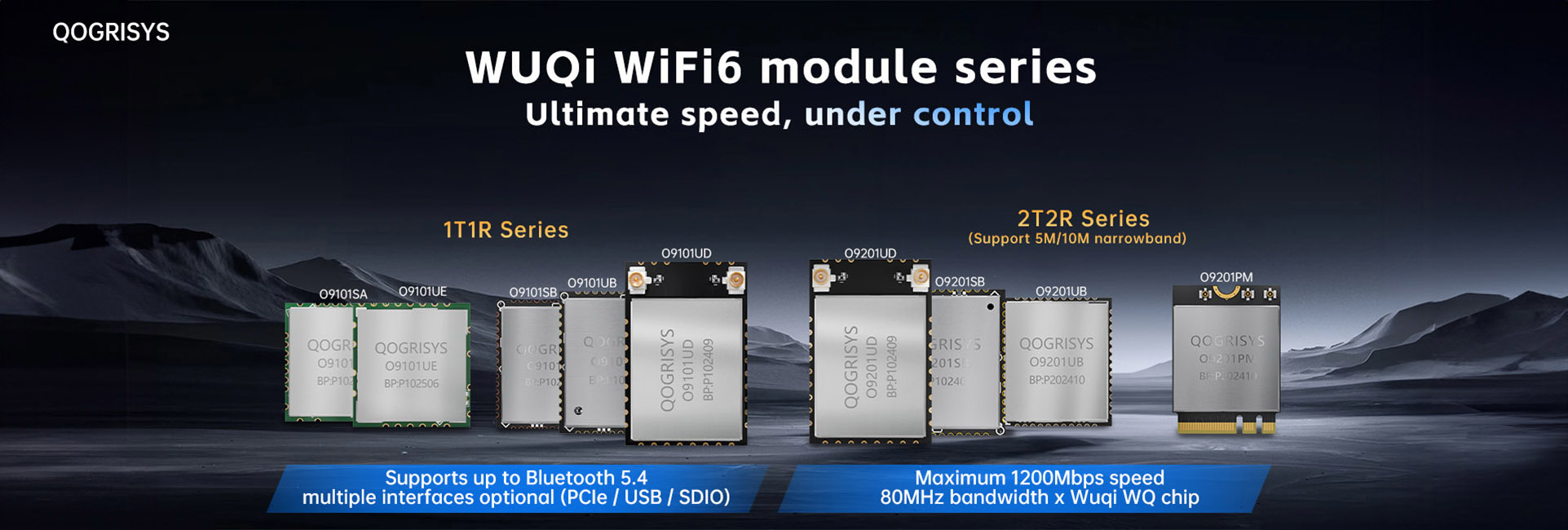
It’s late at night, and you’re deep into your favorite show when suddenly, the screen freezes into a slideshow. The whole family is fighting for bandwidth, and your game’s latency is skyrocketing. Are these frustrating network issues disrupting your smart home experience? Don’t worry! Qogrisys has developed a cutting-edge module equipped with **Wi-Fi 6 + BT5.4**—O9201SB—that is quietly revolutionizing the set-top box industry with an unparalleled "experience upgrade"! 1. The Pain Points of Home Entertainment: Is Your Set-Top Box Truly "Smart"? With the rise of 4K/8K ultra-high-definition videos, cloud gaming, and smart home devices, home networks are under immense pressure: "One Network, Multiple Devices" Leads to Lag**: When the TV, phone, tablet, and smart speaker are all online, Wi-Fi 4/5 simply can’t keep up!   High-Definition Videos Turn into "Mosaic"**: 8K video requires over 100Mbps bandwidth per second, and traditional modules struggle to deliver.   High Costs of Core Chips**: Customization is complex and expensive, leaving manufacturers frustrated.   2. Introducing O9201SB: Wi-Fi 6 + BT5.4 Redefines "Smooth" 1. Speed Boost: Instant 8K Video Streaming Dual-Band Simultaneous Technology**: 2.4GHz for stable wall penetration, 5GHz for blazing-fast speeds, with 2T2R rates up to 1200Mbps. 8K videos load instantly, with zero buffering when dragging the progress bar! MU-MIMO + OFDMA**: Multiple devices can connect simultaneously without competing for bandwidth. 2. Bluetooth 5.4: Unlocking New Smart Possibilities Bluetooth Remote Control with Instant Response**: Enjoy more sensitive voice control and seamless operation. Connect External Speakers and Game Controllers with Zero Latency**: Dive into a fully immersive gaming and entertainment experience.   3. Leading Technology + High-Level Service: A Win-Win for Manufacturers and Users 1. Self-Reliant and Secure, Ensuring Complete Safety Chips comply with international technical standards, ensuring stability and security. Data encryption + localized servers provide comprehensive privacy protection. 2. Flexible Customization, Rapid Response A professional R&D team supports "deep adaptation," completing customization from design to mass production in just 30 days. An optimized supply chain reduces costs by 20% and shortens delivery cycles by 50%.   4. The Future is Here: Seizing the "Golden Gateway" to Smart Homes For users, O9201SB offers a seamless and smooth experience upgrade. For manufacturers, it’s a powerful tool for reducing costs and increasing efficiency. Set-top boxes equipped with this module can not only become the center of home entertainment but also integrate seamlessly with smart home appliances, transforming into a smart control hub. This positions them to capture the core gateway to the trillion-dollar smart home market!     From "usable" to "excellent," and from technological dependence to technological leadership, the O9201SB module developed by Qogrisys is rewriting the rules of the set-top box industry with its outstanding performance and high-level service. Choosing O9201SB isn’t just choosing a module—it’s choosing a future-oriented "experience revolution."  
O9201UB Current State of the Projector Industry: Wireless Connectivity Pain Points Need Urgent Breakthrough
As smart projectors become increasingly common today, user demands for image quality and functionality are continuously increasing. However, the stability and speed of wireless connectivity have become bottlenecks hindering the upgrade of user experience: · 4K/8K Content Transmission Stuttering: High-resolution videos require extremely high bandwidth, and traditional Wi-Fi modules often suffer from delays and buffering in complex environments. · Severe Interference Among Multi-Devices: When projectors are connected simultaneously with multiple devices such as smartphones, tablets, and speakers, network congestion frequently leads to signal interruptions. · Poor Bluetooth Peripheral Experience: Older protocols suffer from high latency and weak anti-interference capabilities, resulting in unstable connections for wireless speakers, game controllers, and other devices. · Conflict Between Power Consumption and Heat Dissipation: High-speed transmission comes with high power consumption, affecting device battery life and even causing heat dissipation issues.       These pain points are undermining your brand's credibility I. O9201UB Module: The "Wireless Heart" Designed for Projectors QOGRISYS has been deeply involved in wireless communication for 12 years. The Wi-Fi 6 + Bluetooth 5.4 dual-mode module O9201UB is designed with four core advantages to restructure the wireless experience in projection scenarios: 1. Wi-Fi 6 Ultra-Speed Transmission, 4K/8K Smooth and Uninterrupted Infinity · Dual-Band Simaltaneous, Smart Switching: 2.4GHz offers strong wall-penetration capabilities, The speed can be up to 1200Mbps while 5GHz, supporting 2T2R DBAC and 1T1R DBDC mode, allowing simultaneous use of different frequency bands for internet access and screen casting, say goodbye to stuttering. · MU-MIMO + OFDMA Technology: Supports high-speed transmission among multiple devices simultaneously, ensuring stable and smooth projection even when multiple users share the network. · Beamforming Technology: Accurately locates device positions, enhances signal strength dynamically, and eliminates projection dead zones, ensuring full signal coverage whether in the living room or conference   ② Bluetooth 5.4 + Low Latency, "Zero Perception" Audio-Video Synchronization · 2Mbps High-Speed Bluetooth: Wireless speakers/headphones’ latency as low as 28ms (industry average : 50ms), delivering concert-like audio effects with "audio-video synchronization." · AFH Anti-Interference Technology: Automatically avoids congested 2.4G channels, allowing multiple devices (remote control + microphone + speakers) to coexist without interference, enabling "instant response" for voice control. · HCI Technology: Provides an intermediate reserve, compatible across kernel versions; USB interface can also connect to Bluetooth speakers, offering premium voice effects, saving debugging time, and reducing pin usage in PCM interface   ③ Compact Size + Low Power Consumption, Greater Design Freedom · Compact Dimension: Ultra-small size of 15×13×2.3mm, suitable for ultra-thin projector designs, saving internal space. · Smart Power Management: Wi-Fi + Bluetooth collaborative power consumption reduced by 20%, extending built-in battery projector runtime by 1.5 hours, ensuring uninterrupted during outdoor campin   4. Flexible Adaptation, Easy Integration · USB 2.0 Interface: Compatible with mainstream projector models, reducing development costs for manufacturers. · Multiple Certifications: Supports WPA3 encryption, BLE Audio, and other standards, ensuring data security and compatibility. ​​II.Seize the New Blue Ocean of "Wireless Projection" Now! The global smart projector market exceeds $80 billion by 2025, with wireless experience becoming a core decision-making factor for users. Projectors equipped with O9201UB are not just "viewing tools" but also home entertainment hubs, business collaboration centers, and smart home gateways. Home Entertainment Scenarios: Wireless game screen casting: Supports 4K@60fps low-latency transmission, paired with immersive Bluetooth speakers. Smart home integration: Direct Wi-Fi connection to control screens/lights, creating an immersive theater system. Business Office Scenarios: Multi-device wireless screen sharing among multiple-devices:Support demonstrations from multiple terminals, improving meeting efficiency by 50%. Remote collaboration optimization: QoS intelligent bandwidth allocation ensures video conferences stable Educational Scenarios: Online classroom assurance: Anti-interference design ensures 4K courseware display smooth. Interactive teaching support: Bluetooth microphone latency < 30ms, enabling zero-lag teacher-student interaction. III.Choosing O9201UB Means You Gain More Than Just a Module ▶Advanced Technology, Performance Benchmark: Based on IEEE 802.11ax and Bluetooth 5.4 protocols, performance surpasses traditional modules completely. ▶ Service Assurance: 7x24 technical support, providing "module + driver + scenario optimization" comprehensive services. ▶ Ecosystem Collaboration, Expanding Scenarios: Beyond projectors, it can integrate with smart home devices (e.g., lights, screens), helping projectors upgrade into smart control hubs. Conclusion: The Future of Wireless Projection is Defined by You! The O9201UB module, with its core advantages of "fast, stable, and efficient," provides the ultimate wireless connectivity solution for the projector industry. Whether it's the home theater’s ultimate experience or efficient business collaboration, it can be handled easily. QOGRISYS is ready to collaborate with you, driving industry transformation through technological innovation, and making every projector a gateway to "wireless freedom"!
Enterprise Wireless Enters into the "Intelligent Era": Future Network Evolution Directions from Cisco's Trends
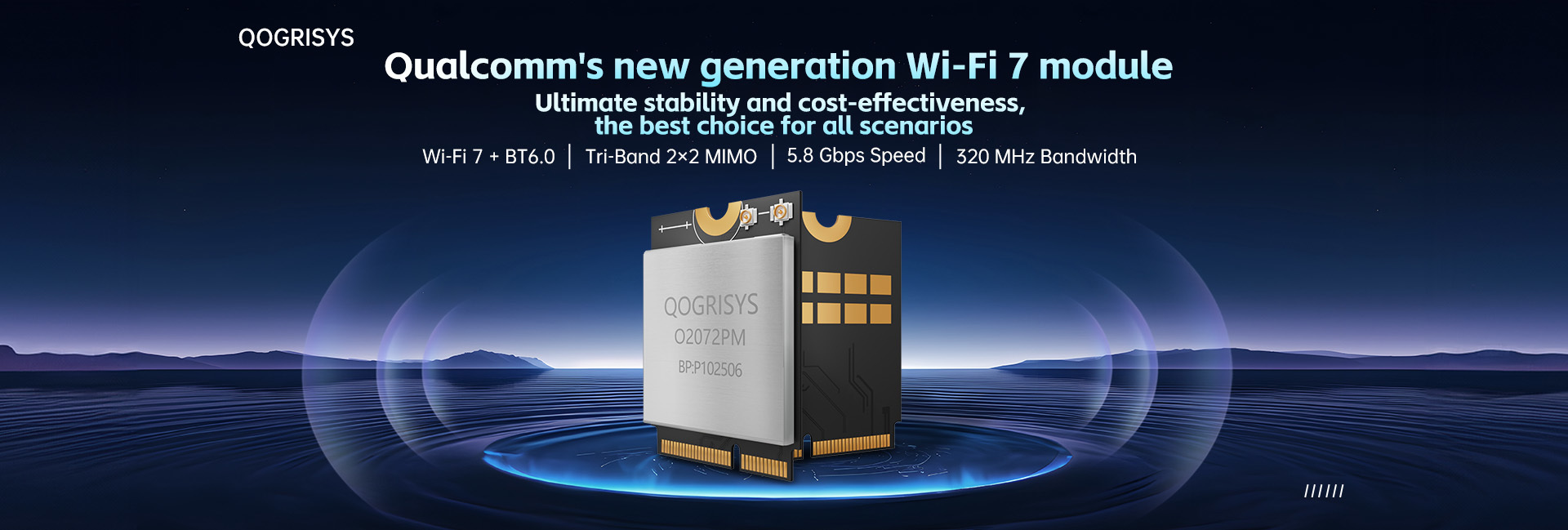
As enterprise-grade wireless networks rapidly advance towards intelligence, automation, and visualization, global vendors are re-evaluating the foundational capability planning for next-generation Wi-Fi and the Internet of Things (IoT). At the WWC conference in Dubai, Cisco executives systematically outlined key future directions for enterprise wireless: simpler network assurance, more intelligent AI-powered operations and maintenance (O&M), lower-latency wireless backhaul, higher-level security, and the accelerated evolution of enterprise spaces from "traditional connectivity" to "intelligent spaces." AI-Driven Enterprise Wireless: From Reactive Response to Proactive Optimization Enterprise wireless technology is undergoing a profound transformation. Bahador Amiri, Senior Director of Wireless Engineering at Cisco, pointed out that IT team sizes are generally being compressed while the number of devices continues to grow, necessitating that network assurance becomes more automated and predictable. He stated that enterprise wireless is transitioning from a manual, reactive model to an AI-based automated assurance model: networks proactively analyze status, perform automated remediation, and predict potential risks in the background, significantly improving overall availability. The AI-RRM (AI Radio Resource Management) demonstrated by Cisco is a typical case of this shift. This technology, trained on real traffic trends, can automatically optimize wireless resource allocation based on user mobility, device density, and scenario changes, reducing the complexity of traditional spectrum and power tuning. Simultaneously, the capability for "natural language query of network status" is becoming an important direction for next-generation network O&M, enabling IT personnel to perform diagnostics and issue commands in a more intuitive way. Post-Quantum Cryptography Gradually Becoming Baseline Beyond the trend of intelligentization, security has also become a significant focus for the next phase of enterprise wireless. With the development of quantum computing, traditional cryptographic systems face new challenges. At the conference, Cisco emphasized its investment in the PQC (Post-Quantum Cryptography) direction, aiming to ensure network security even in the context of potential future quantum attacks. Strengthening Role of Wi-Fi in Critical Scenarios In industry scenarios such as transportation, energy, and industrial automation, the demand for "ultra-reliable, ultra-low latency" is continuously increasing. Cisco is configuring its high-end access points to support proprietary ultra-low latency wireless backhaul technology, enabling Wi-Fi to undertake more tasks akin to "quasi-5G communication," granting wireless a higher priority in mission-critical operations. Moving from Fragmented Systems Towards a Unified Platform Cisco revealed that its access points used for IoT connectivity have grown significantly, from 1 million in 2023 to 4.9 million. Previously, IoT connectivity was long fragmented by disparate protocols and independent systems. Today, enterprises are progressively integrating towards unified platforms, utilizing a single AP to carry more sensing, tracking, positioning, and energy management capabilities. In this direction, Cisco Spaces has become a typical solution, supporting functions like asset tracking, navigation, environmental monitoring, and occupancy analysis through a unified platform. To underpin these capabilities, Cisco has integrated four Wi-Fi radio modules, BLE 6.0, UWB, and GPS into its flagship AP 9178, transforming it into a multi-modal information entry point. . (Bahador Amiri, Senior Director of Wireless Engineering at Cisco, delivering a speech at the WWC conference in Dubai on November 19, 2025) Wireless Module Requirements for New Scenarios Are Evolving With the growth of intelligent spaces, low-latency backhaul, and concurrent multi-service demands, the requirements for wireless modules in new-generation enterprise terminals and IoT devices are also changing: higher performance, lower latency, smaller size, and stronger multi-modal compatibility are becoming mainstream market directions. Following this trend, QOGRISYS has launched the O2072PB Tri-Band Wi-Fi 7 + Bluetooth 6.0 Module. This product features a 2×2 MIMO and 320MHz ultra-wide bandwidth design. It achieves a peak rate of 5.8Gbps in the 6GHz band and supports key Wi-Fi 7 capabilities such as eMLSR, Multi-Link Operation, 4K QAM, and 802.11az distance measurement. Its compact 15×13×2.3 mm package and PCIe interface enable lightweight adaptation for enterprise terminals, intelligent space devices, and industrial IoT, accelerating the deployment of next-generation high-performance wireless capabilities in more scenarios.

2025

12/15

Global ISPs Accelerate Towards Wi-Fi 7: The Next Competition in the Multi-Gigabit Era
At the critical juncture where global broadband is entering the multi-gigabit era, Wi-Fi 7 is moving from standardization to large-scale deployment at an unprecedented speed. A recent survey released by Heavy Reading (part of Omdia) in collaboration with eero and Qualcomm shows that among 90 global Internet Service Providers (ISPs), over 50% have already deployed or plan to deploy Wi-Fi 7 based on broadband solutions within the next 12 months. This pace far exceeds that of any previous generation of Wi-Fi technology, indicating that the industry chain is proactively embracing a new window for experience upgrades. The core driver for the adoption of Wi-Fi 7 comes from the rapid growth of multi-gigabit broadband plans. According to the survey data, the compound annual growth rate of such plans exceeds 20%, creating new competitive points for operators. Simultaneously, 61% of the surveyed operators cited "faster wireless experience" as the primary driver for upgrading to Wi-Fi 7, followed closely by "better user experience" (48%) and "lower latency" (47%). Whether for streaming media, cloud gaming, or large-scale smart device connectivity, current user demands are exceeding the capabilities of existing Wi-Fi standards. Looking at the standards lifecycle, the support window for older generation technologies by operators is noticeably narrowing. The survey reveals that 63% of ISPs have stopped or plan to stop supporting Wi-Fi 5 within two years; the lifecycle of Wi-Fi 6 is also shortening, with 38% of ISPs stating they will support it for no more than two years. This signifies that the iteration speed of Wi-Fi technology is accelerating, and the comprehensive performance advantages of Wi-Fi 7 in bandwidth, concurrency, intelligent scheduling, etc., make it the mainstay for wireless experiences in the coming years. The structure of user complaints is also pushing operators to accelerate the shift to Wi-Fi 7. The survey indicates that "insufficient indoor coverage" and "too many signal dead zones" remain the primary user complaints. To improve the coverage experience, 61% of operators are introducing multi-node architectures into their solutions, including Wi-Fi extenders (33%) and Mesh systems (28%). This aligns directly with the inherent advantages of Wi-Fi 7 in technologies like tri-band concurrency, Multi-Link Operation (MLO), and intelligent path selection. From an industry trend perspective, the core capabilities of Wi-Fi 7 are being widely recognized: • 66% of enterprise and consumer users consider tri-band support (2.4GHz, 5GHz, 6GHz) a necessary capability; • 94% of ISPs have deployed or plan to deploy Multi-Link Operation (MLO), which is considered a key selling point for Wi-Fi 7; • 67% of operators rank "security and reliability" as the primary evaluation metric for Wi-Fi equipment; • AI-based network management is being implemented, with automated fault diagnosis (28%) and intelligent optimization (26%) receiving the most attention. Although Wi-Fi 7 is currently mainly concentrated in the high-end market, as the supply chain continues to introduce more cost-effective devices, the barrier to adoption for Wi-Fi 7 will rapidly decrease. The operator ecosystem, terminal brands, consumer electronics, and industrial applications will all accelerate their alignment with the new standard, further unleashing the scale effect of the industry chain.   It is worth noting that the development of Wi-Fi 7 is not only reflected in routers and home networks; its device-side ecosystem is also growing simultaneously. Emerging scenarios such as smart hardware, industrial equipment, IoT terminals, and spatial awareness devices have continuously increasing demands for higher throughput, lower latency, and more stable links, making the deployment of Wi-Fi 7 on the device side particularly crucial. Within this trend, new-generation communication modules are becoming an important force driving Wi-Fi 7 into more application scenarios. Taking the O2072PM launched by QOGRISYS as an example, this Wi-Fi 7 module for devices adopts an advanced tri-band architecture, ensuring more stable link performance in high-density environments. It supports 320MHz ultra-wide bandwidth and enhanced Multi-Link Operation, and integrates next-generation sensing capabilities, providing richer functionality in scenarios like smart homes, industrial interconnection, and spatial positioning. Simultaneously, the module features built-in auxiliary RF links and long-range Bluetooth capabilities, enabling it to adapt to the needs of various types of smart terminals and industrial equipment. This allows Wi-Fi 7 to no longer exist only in home routers but to truly enter broader, more diverse, and complex application fields. As products like the O2072PM continue to enter the market, the Wi-Fi 7 ecosystem will expand from operator networks to terminal devices and industry applications, propelling the entire wireless ecosystem into a new phase characterized by higher speed, greater intelligence, and enhanced stability.

2025

11/27

Wi-Fi 8 Technology Outlook: Redefining Wireless Connectivity for the AI Era
Wi-Fi 8 Technology Outlook: Redefining Wireless Connectivity for the AI Era Intel recently released a white paper that systematically outlines, for the first time, the core vision for the next-generation wireless technology, Wi-Fi 8 (based on the IEEE P802.11bn standard). Unlike Wi-Fi 7, which primarily pursued peak rate increases, Wi-Fi 8's strategic focus shifts to "Deterministic Experience," aiming to build an ultra-reliable and intelligently perceptive wireless environment. According to the roadmap, the first commercial devices compliant with the standard are expected to arrive between late 2027 and early 2028. From "High Speed" to "Reliable": The Four Value Pillars of Wi-Fi 8 The technological evolution of Wi-Fi 8 revolves around four core dimensions: Network Performance Optimization remains the foundation. The new generation standard will improve throughput by at least 25% in complex environments and significantly reduce latency through finer channel access control and extended coverage technologies. Deterministic Connectivity becomes the key breakthrough. Wi-Fi 8 introduces enhanced priority scheduling mechanisms, capable of providing dedicated channels for critical traffic like gaming and industrial control, ensuring data packets are delivered reliably within specified time. Security and Privacy Protection receive comprehensive upgrades. The standard is expected to support enhanced protocols like IEEE 802.11bi, enabling encryption protection for the entire connection process and significantly improving security in public network environments. AI Empowerment is the standout feature. Devices will natively support Wi-Fi signal-based sensing and ranging capabilities, laying the groundwork for intelligent applications such as gesture recognition and human presence detection. Specific Scenarios Transforming the User Experience Smart Homes will be among the first to benefit. As the number of connected home devices approaches 30, Wi-Fi 8's multi-AP coordination technology enables router networks to work in concert like a "symphony orchestra," completely eliminating dead zones and ensuring critical applications like gaming and video conferencing remain unaffected by download tasks. Enterprise Applications usher in innovation. In high-density scenarios like airports and stadiums, access points can coordinate transmission timing and power in real-time, avoiding mutual interference, allowing thousands of users to enjoy a smooth experience simultaneously. XR Collaboration enters a new stage. When colleagues collaborate remotely via AR glasses, Wi-Fi 8's deterministic latency ensures virtual operations and real feedback are almost synchronous, truly enabling "immersive" work efficiency. The Underlying Technological Innovations Multi-AP Coordination is the core technological breakthrough. Multiple access points can share scheduling information, intelligently allocate transmission resources, and even coordinately adjust antenna beam shapes, effectively reducing interference from adjacent networks. Intelligent Spectrum Management makes connections more stable. The newly added non-primary channel access function allows devices to quickly switch to idle frequency bands, akin to planning multiple "emergency lanes" for data flows, significantly enhancing anti-interference capability. Seamless Roaming experience is upgraded. Devices can maintain a "connect first, disconnect later" handover between access points, combined with a pre-established security key mechanism, making video calls during movement almost imperceptible. Industry Preparation and Ecosystem Outlook Although the final standard ratification is still some time away, chip manufacturers like Intel and Broadcom have already begun preliminary technology planning. Notably, Wi-Fi 8 will be fully backward compatible with existing devices, ensuring a smooth transition for user investments. Industry analysts point out that the true value of Wi-Fi 8 lies in providing the wireless foundation for applications in the AI era. From perceptive interactions in smart homes to precise control in the Industrial IoT, its guarantee of "deterministic performance" will unlock a new cycle of innovation. Wi-Fi 7 Modules Provide the Hardware Foundation for Industry Upgrades While the industry focuses on the development of Wi-Fi 8, the O2072PM wireless module launched by QOGRISYS has entered the large-scale commercial stage. This module adopts a tri-band concurrent architecture (2.4/5/6 GHz), supports 320 MHz channel bandwidth and a theoretical rate of 5.8 Gbps, significantly improving spectrum efficiency through 2x2 MIMO and 4K QAM technologies. Its Enhanced Multi-Link Operation (eMLSR) supports intelligent switching between multiple frequency bands, effectively ensuring connection reliability. Integrated Bluetooth 6.0 technology can simultaneously support LE Audio and BLE long-range transmission, meeting the composite connection needs of multimedia and IoT devices. For industrial applications, it features High Accuracy Distance Measurement (HADM) and auxiliary radio frequency functions, adapting to low-latency scenarios such as industrial control and smart warehousing. The compact M.2 2230 form factor facilitates terminal integration, providing hardware support for smart device upgrades and laying the foundation for the evolution towards Wi-Fi 8.  

2025

11/24